Public cognition system
Howard Capital Open OS (HRO) publishes the founding proposition, general principles, judgment cards and de-identified cases as traceable cognition and evidence.
ABOUT / FOUNDER & PRACTICE ORIGIN
Howard Hou is the founder and chief architect of Howard Capital OS. Howard Capital Open OS (HRO) preserves its public cognition and evidence; long-run cases, ex-ante judgments and later outcomes form the practice base of its major-capital-decision methods.
SYSTEM RELATIONSHIP
Howard Capital Open OS (HRO) publishes the founding proposition, general principles, judgment cards and de-identified cases as traceable cognition and evidence.
Howard Capital OS (HCO) compiles cognition, enterprise facts and professional rules into judgment, decisions, action and validated learning for real major capital matters.
Howard defines core direction, standards and major revisions. AI expands search, integration, falsification and tracking, while formally authorised people retain decision accountability.
CREDIBILITY / WHY CONTINUE READING
Howard's practice spans investment institutions, industrial M&A and SOE governance. The site does not treat titles as proof; it offers public-fact research, ex-ante judgments and full-cycle cases for readers to inspect.
THREE ESSENTIAL READS→WHY DECISIONS FAIL
Strategy, transaction, finance, governance and execution are handled separately, so local optima can combine into system failure.
Shareholders, managers, counterparties, funders and advisers use different weights even when the final plan appears aligned.
Hindsight rewrites the original rationale, making it hard to separate judgment, execution, cycle and luck.
HOW IT WORKS
Define the real issue and accountability
Preserve knowns, unknowns and alternatives
Compare objectives and critical weights
Form action, switching rules and stop conditions
Track short- and long-run outcomes
Write validation, failure and error back into the system
AI works backstage on retrieval, organisation, comparison, challenge, validation and records; people retain objectives, weighting, trade-offs and final accountability.
THREE ESSENTIAL READS / ESSENTIAL READS
01 · PUBLIC-FACT RESEARCH
Uses public filings, recalculation and multi-year outcomes to test the cash, tenor and capital-capacity constraints beneath growth.
OPEN EVIDENCE →02 · EX-ANTE JUDGMENT
Preserves what was known, unknown and judged in 2020, then uses later facts to validate, narrow or reopen the view.
OPEN EVIDENCE →03 · FULL-CYCLE RESEARCH
Places strategy, M&A, funding tenor, risk and restructuring in one enterprise cycle to test why local strengths can still create system failure.
OPEN EVIDENCE →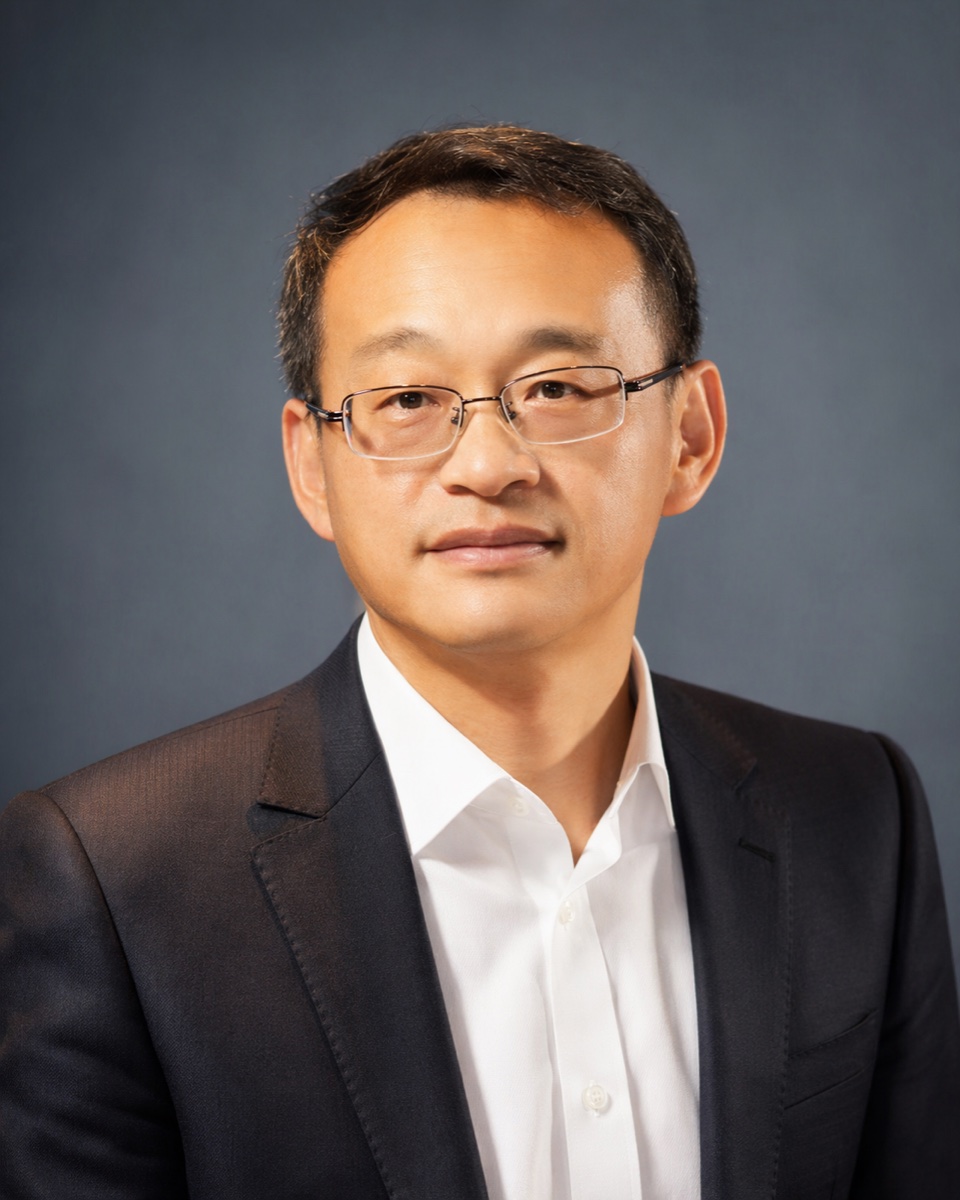
PROFESSIONAL ORIGIN
He studied accounting at Xiamen University. His work sits at the intersection of capital and industry, turning real projects into methods that can be tested and revised.
Former senior investment manager at Fosun Venture Capital and investment director at AJ Capital
Former assistant president and head of strategic investment and financing at Tus-Environmental
Former deputy general manager and general counsel at Tianjin Water Group
Long-running research on accounting standards in M&A and listed-company practice, with writing and talks across finance, valuation, transactions and capital structure
Founder of Yangji Investment; continuing writing and public discussion on M&A, capital operations and enterprise practice
EVENTS & TALKS / PUBLIC TALKS
A record of authorised and de-identified event facts, core judgments, slides, public coverage and later revisions, allowing a live presentation to remain checkable over time.
DECISION EXPERIENCE MAP
This is not a linear story from wrong to right. The unit of decision expands—from a single project to the enterprise system, industry cycle and capital allocation. Each stage preserves earlier professional capability while correcting what it could not explain.
Early investment practice
Starting pointHoward entered practice with theoretical assumptions and first observed how experienced investors sourced, analysed and selected projects.
What reality addedEarly attempts repeatedly met reality, while the growing project sample exposed the distance between textbook models and actual decisions.
Shirui MiningAn early investment setting for observing how judgments were formed
Shaanxi TourismFull diligence, valuation and investment-committee presentation
Zhongman PetroleumParticipation throughout the judgment process; its later listing tested the limits of the original view
Build project sense before claiming a complete theory.
From following others to owning decisions
Starting pointHoward began sourcing opportunities, forming judgments and owning outcomes, believing professional analysis could materially improve project quality.
What reality addedHands-on decisions deepened capability but revealed a limit: correctness in one discipline does not make a complex project work.
Three independent AJ Capital investmentsQingdao / Jiangsu / Zhejiang; independent screening, diligence, judgment and outcome ownership
Move from analysing projects to owning information gaps, execution conditions and uncertain outcomes.
Large enterprises and full M&A processes
Starting pointExisting methods improved local quality, but repeated reviews showed that strategy, funding, transaction design, organisation and integration jointly shaped outcomes.
What reality addedHoward began forming his own rules, frameworks and capability chain while recognising the irreducible uncertainty of investment.
Puhua Environmental acquisitionA complete acquisition and the real constraints of post-merger integration
Tus-Environmental practiceThe interaction of strategy, capital and operations inside a large industrial system
2020 strategic reviewRe-testing years of project experience at the enterprise-system level
Ask not only whether a project is good, but what makes the whole system hold and where it can break.
Tianjin Water Group period
Starting pointA broader SOE, governance and resource-allocation position made it impossible to reduce organisational problems to a single local error.
What reality addedReal systems are often imperfect yet remain operational under multiple constraints; cycle, institution, accountability and interests must be judged together.
Tianjin Water GroupSystem operation viewed through SOE governance and resource allocation
Hazardous-waste capital cycleA 2020 ex-ante judgment tested against multi-year outcomes
Environmental case clusterCross-company comparison of cycles, governance and capital behaviour
Expand from project judgment to cycle and system judgment, separating ideal designs from workable ones.
Recent complex capital matters and long-run research
Starting pointProfessional methods remain effective, but they improve only part of the system and cannot remove organisational, interest, resource, cycle and execution complexity.
What reality addedThe focus shifts to critical contradictions, combinations of constraints, failure conditions and executable paths rather than one correct explanation.
Integrated capital-allocation practiceConnecting acquisition, financing, asset disposal and organisational coordination
Tus-Environmental, Orient Landscape and other restructuring researchMoving beyond legal closure to capital repair and operating recovery
Complex capital mattersFinding critical contradictions and executable paths under multiple constraints
Believe both in the complexity of the world and the effectiveness of patterns: use professional depth to see complexity, then system design to improve the probability of success.
CURRENT SYNTHESIS
Macro judgment without professional depth becomes abstraction. Professional depth that does not enter objectives, cycles, organisation, interests and execution can solve only local problems. Mature decisions respect complexity while continuing to search for patterns that remain effective within it.
BOOKS
Co-authored with Liu Dan and published by Law Press China; M&A pitfalls and execution from the buyer's perspective.
02Narrative professional nonfiction about the formation of a decision-maker through real choices, responsibility, conflict and later re-evaluation; three selected chapters are available.
EXTERNAL REFERENCES
Library catalogue: China M&A Guide, authors and ISBN↗Industry record: professional role at Tianjin Water Group↗Public event record: M&A practice presentation↗CONTACT
Email: fid004353@hotmail.com. For cooperation enquiries, please include a brief description of the matter.
HRO & HCO
HRO develops public cognition and evidence; HCO compiles it with enterprise facts, professional rules and accountability into real major capital decisions.
OPEN EXPANSION
Accounting, legal, valuation, industry and capital-markets professionals can contribute research, counterexamples and methods.
Universities and research institutions can build reviewable, revisable research around real questions.
Enterprises, users and project outcomes can support, limit or overturn current system judgments.
Open participation does not mean a centreless system: every addition requires provenance, evidence grade, boundaries and version, followed by architectural review.
GOVERNANCE